BY SCOTT MEINECKE
“So, what was it like?”
That’s the most common question I’ve been asked since returning home from three weeks in Guatemala. My quick answer has been, “It was extremely hot!” And it was. But that answer doesn’t begin to capture what the experience was really like or what it meant to help bring electricity to families who had been living without it.
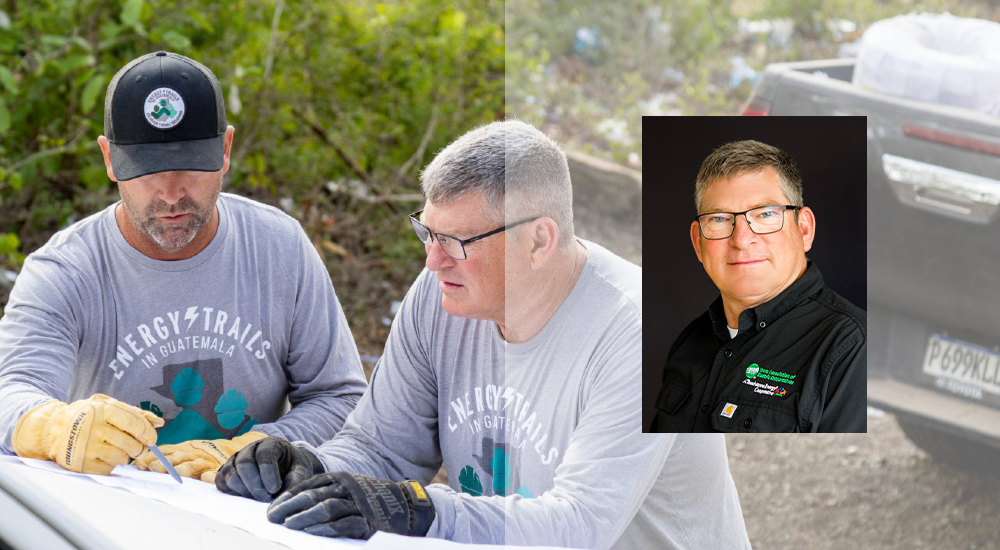
I was part of a team of 18 linemen from electric co-ops in Iowa, Oklahoma and Colorado who volunteered to build an electric distribution system and bring electricity to more than 80 homes, an elementary school and a health center in a rural Guatemalan community.
A different kind of line work
In Guatemala City, where we landed, roads were busy and modern. At our jobsites, roads were narrow, rocky switchback paths through the mountains. It rained nearly every night, creating muddy conditions and adding to the unrelenting humidity.
The line construction was very different from what we are used to in Iowa. In Guatemala, we built long spans across deep valleys. Local villagers set the poles and dug most of the anchors. We watched in amazement as they helped string wire across the valleys.
My primary focus during the project was wiring homes for electricity. Each home received an electrical panel with two breakers, two outlets, two switches and four lights. We worked with an interpreter to communicate with the homeowners and determine where everything should be located. It was humbling to think that something as simple as flipping on a light switch would become part of daily life for these families. I was continually amazed by how appreciative they were to have us there.
Connections beyond electricity
My best memories all revolve around the children. I see my own grandchildren in their faces. Team members had packed small items to give to the kids, including Hot Wheels cars, hair clips and soccer balls. The children would smile and hold out their hands as we went past, not just at the jobsite but along the roads between town and the worksite. Our daily commute soon took on a parade-like atmosphere. The kids took great joy in saying “thank you,” “hello” and “goodbye” in English!
At one home we were preparing to wire, several toy cars we had given out earlier were lined up on the covered porch, just like my grandson lines up his cars back home. The girls had made small beds for the dolls they had received. Those little moments reminded me how much children are alike, no matter where they live.
The homes are very small, generally two rooms with beds in both. You could literally pack most of what many of the families own in the trunk of a car. I pray that having electricity will make daily life a little easier and open new opportunities for these families.
When people ask me what Guatemala was like, I can tell them about the heat, the mountain roads and the work. But what I’ll remember most are the people, especially the children, and how grateful they were to receive something most of us rarely stop to think about: electricity.
The experience was also a powerful reminder of just how much electricity can change daily life. It was an honor to work alongside such a great team of cooperative linemen to bring power to this community. Thank you for your support and prayers for our safety while we were there.
Scott Meinecke is the director of safety and loss control for the Iowa Association of Electric Cooperatives.