BY ERIN CAMPBELL
Electricity is an essential element of our modern lives. We depend on it for just about everything, including lighting, cooling and heating, water heating, cooking, refrigeration, washing and drying clothes, and powering our devices. It’s hard to imagine getting through the day without power, but that’s a harsh reality for parts of the world that still don’t have access to safe, reliable or affordable electricity.
Electric cooperatives across America are working to change that, one rural community at a time. Through NRECA International, the nonprofit international electrification affiliate of the National Rural Electric Cooperative Association (NRECA), electric co-ops have helped bring electricity to more than 220 million people worldwide since 1962.
Iowa electric cooperatives have assisted with three NRECA International electrification buildouts in rural Guatemala. Most recently, seven Iowa electric co-op linemen teamed up with linemen from Oklahoma and Colorado to power the rural Guatemalan villages of El Estucal and Montenegro in September.
Preparing for the work ahead
Long before the linemen boarded the plane to Central America, NRECA International staff were hard at work with statewide electric cooperative associations to manage project funding, logistics, scheduling and staffing. For this latest project, the Iowa Association of Electric Cooperatives (IAEC) worked with the Oklahoma Association of Electric Cooperatives and the Colorado Rural Electric Association to form the 18-member team needed to tackle the project.
“Participating in these international projects gives us an opportunity to work across state lines with other cooperatives, which is an incredible example of how we live out the co-op principle of cooperation among co-ops,” said IAEC Executive Vice President Leslie Kaufman.
With funding ready and the project schedule finalized, team members were selected from electric cooperatives within the three participating states.
“The linemen met each other during an orientation session before the project, and the underlying message we shared was to stay flexible and adapt to your circumstances,” said IAEC Director of Safety Scott Meinecke.
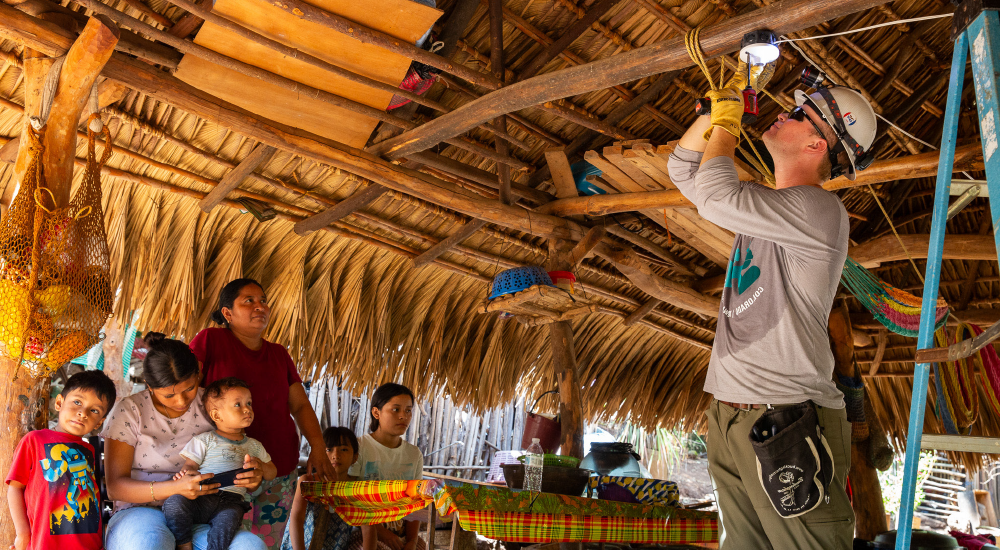
The team logged 12 workdays filled with manual labor tasks like digging pole holes by hand, busting anchors in rock by hand, climbing poles, framing poles, wiring conductor over long spans, hanging transformers, often by hand, and wiring homes in extremely hot and humid conditions. The local villagers assisted with digging pole holes, trimming trees and pulling hundreds of feet of conductor through mountainous terrain.
Overcoming challenges in the field
This 2026 project was the second international electrification project for Meinecke, who journeyed to Guatemala in 2024 to assist with a project that included linemen from Iowa and Minnesota co-ops.
“The international work is different from the outage restoration mutual aid work we typically coordinate among electric cooperatives,” Meinecke said. “We don’t have modern equipment or bucket trucks in Guatemala, which can make safety much more of a challenge. We also must adjust to a climate and culture that is new to us.”
Adam Hawkins, a lineman from T.I.P. Rural Electric Cooperative, said, “By far, the biggest challenge on this project was the terrain. On the first day, the anchors were not set, so we had to dig all the holes and bust all the anchors by hand; it was raining, and the terrain was muddy, so that was challenging.”
Team member Jeremy Jochims, a foreman at Harrison County Rural Electric Cooperative, agreed. “It was a constant battle with the terrain and the environment,” he said. “Dragging wire through the jungle and using more manual tools and methods made it seem like we weren’t going to be able to finish. Everything was fighting us, but we all worked together, and we pulled it off.”
The linemen were struck by how happy the local people were, even though they don’t have very much compared to American standards. The people and the way they live made a lasting impression.
Prairie Energy Cooperative lineman Wes Held shared this update while in Guatemala: “The best part for me each day is when we head up the mountain and come back down. Driving by the villagers, they’re so friendly and welcoming. Everyone waves, whistles and hollers at us as we go by. A special thing they do here as you pass each other on the roads is a short double honk, like their way of saying hello, or a special whistle that they do; it makes us laugh.”
Cody Stackhouse of Southwest Iowa Rural Electric Cooperative said what impacted him most was the people. He said they were incredibly welcoming and grateful, even though many have so little.
“A local man named Rudy helped the linemen carry equipment, shared fresh papaya from his garden, and even played soccer with the team and local kids,” he shared. “The community welcomed us with open arms, and they cooked amazing meals for our team!”
Electricity brings new possibilities
The team wired each home for four lights, two outlets and two light switches. It may not seem like much to us, but electricity will bring transformation and opportunity to these forgotten communities. The linemen saw a 5-year-old girl washing clothes by hand and women cooking over open flames in their homes. Electricity will undoubtedly make these tasks much safer and easier, just as it did for rural Iowans 90 years ago when electric co-ops were formed.
“I met a guy who is in his 80s, and it’ll be the first time he’s ever had electricity. It’s just eye-opening to think about how dramatic the impact will be and how much their lives will change,” said Jeremiah Ruby of Nishnabotna Valley Rural Electric Cooperative.
During the lighting ceremony on Sept. 30, each home received an electric burner unit for safer cooking. The team was also able to complete a community service project, updating the elementary school kitchen with a refrigerator, cooktop, supplies and shelving. They also stocked a newly built health center with supplies.
Now that the electric infrastructure is in place, the villages will be served by the local municipal electric utility.
The linemen also talked about how the team formed a brotherhood almost instantly. Held said, “Our team of guys came from multiple states and by day seven it felt like we have known each other forever. We have a great group, a lot of really good linemen down here.”
We know that bringing electricity to these remote areas will improve quality of life for generations to come, including better health, educational outcomes and economic opportunities.
Electric cooperatives were proud to be a part of this transformation in rural America in the 1930s, and we’re proud to maintain our legacy by participating in these international electrification projects today.
Erin Campbell is the director of communications for the Iowa Association of Electric Cooperatives.